No scheduled visitors today
















































































Association
Countries Attending
Graduates
Alumni
Virtual Engagements
Virtual Participants
Years in Service
152
16,750*
15,840
133
7,759
30
positions
Vice President/Deputy PM
Minister/Deputy Minister
Ambassador/High Commissioner
Chief or Deputy Chief of Defense
Chief or Deputy Chief of Service
Cabinet or Parliament appointment
General/Flag Officer
11
122
276
56
114
210
1594
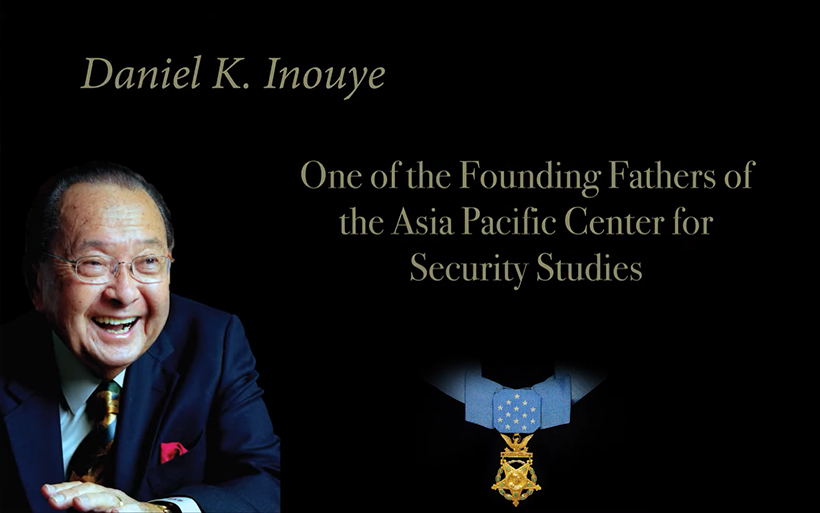
by Dr. Jimmie R. Lackey, who was then an Army colonel, and is a former DKI APCSS executive director. The Center was renamed on February 2015 to Honor the late Senator, Daniel K. Inouye.
Our Team
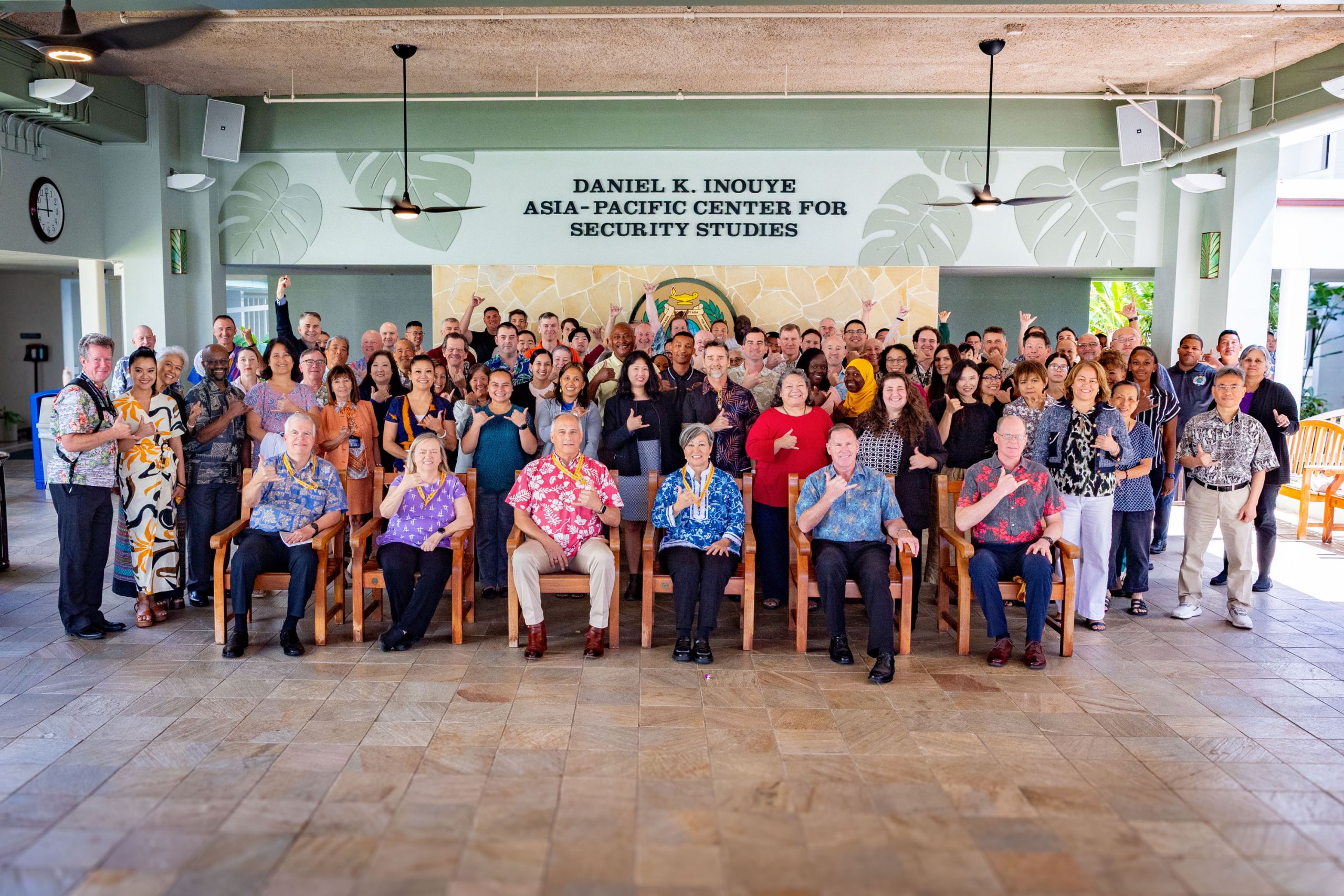
Our team is a dedicated group of professionals committed to enhancing regional security cooperation in the Asia-Pacific region. Comprised of military, diplomatic, and academic experts, the team works collaboratively to address contemporary security challenges. Through education, dialogue, and research, the DKI APCSS team fosters mutual understanding and strengthens partnerships among nations.
News
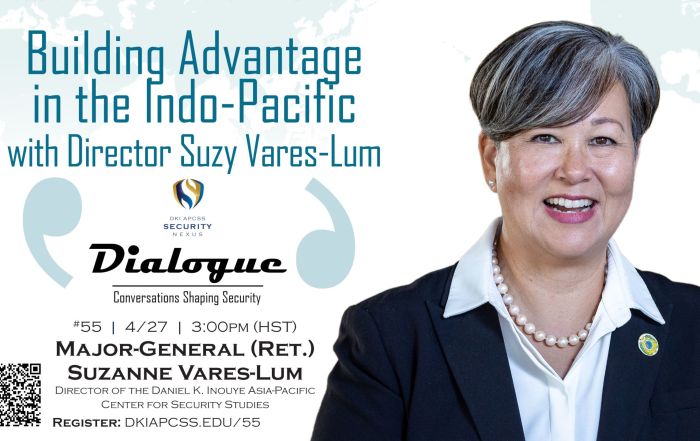
Dialogue | Episode 55: Building Advantage in the Indo-Pacific – From Dialogue to Outcomes
The Indo-Pacific is not short on dialogue. Across the region, coordination is constant—through conferences, working groups, bilateral engagements, and multilateral forums. Yet a harder question persists: Why do aligned partners still struggle to act in concert when it matters most?

MIPOC 26-2 Blooms in the Capital Region
This spring, as the cherry trees that proliferate throughout the National Capital Region were painting the landscape with gorgeous shades of pink, the Daniel K. Inouye Asia-Pacific Center for Security Studies (DKI APCSS) convened the Mobile Indo-Pacific Orientation Course (MIPOC) 26-2 from April 6-10. The event gathered 127 participants, including 98 U.S. government officials and 29 international representatives, to address evolving regional security dynamics.
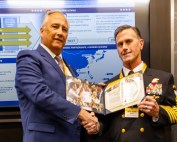
DKI APCSS Hosts Washington Alumni Event, Honors SEAC David Isom as DKI APCSS (US) Alumnus of the Year
The Daniel K. Inouye Asia-Pacific Center for Security Studies connected with its Washington, D.C.-based alumni network during an April 9 event, bringing together more than 60 U.S. and international graduates. The gathering included more than 40 U.S. and 20 international alumni. Among the distinguished guests were U.S. Ambassador Marie Damour; Timor-Leste Ambassador to the U.S. Jose Gutteres; Nepal Defense Attaché Brig. Purna Dhakal; Nepal Chargé d'Affaires Sharad Aran; and Henry Rector of the U.S. State Department.

2025 DKI APCSS Alumni Awards: Recognizing Excellence in Indo-Pacific Security
The Daniel K. Inouye Asia-Pacific Center for Security Studies announces the 2025 Alumni Awards, honoring leaders in cybersecurity, NCO professionalization, and civil-military cooperation who advance Indo-Pacific security and collaboration.

A Review of “The First Island Chained: Taiwan Resistance and Resilience” Wargame and Workshop
Doctors Lumpy Lumbaca and Sam Mullins from the Daniel K. Inouye Asia-Pacific Center for Security Studies (DKI APCSS) recently participated in “The First Island Chained: Taiwan Resistance and Resilience” wargame and workshop. Held at Northeastern University in Arlington from March 31 to April 2, 2026, the event represented a significant departure from traditional military simulations
 The stories posted here are only excerpts. Please go to our website to read the full articles.
apcss.org/latest-news
Dr. Deon K. Canyon
(Mission Partner)
(Executive Agent)
Maj. Gen (Ret.), U.S. Army
Suzanne Vares-Lum
Col. (Ret.), U.S. Army
Russell Bailey
Dr. Lori Forman
Col. Matthew R. Kent
& Business Ops
Capt. (Ret.) U.S. Navy
Wade Turvold
Security Studies (CSS)
Capt. (Ret.) U.S. Navy
Carleton Cramer
& Business Ops
Col. Jeffrey Digsby
shared understanding, and networked relationships among civilian and military practitioners and institutions to advance a free and open Indo-Pacific.
- Office of the Secretary
of Defense (Policy) - Joint Staff
- Service HQs
- Defense Security
Cooperation Agency - Regional Centers
- US Indo-Pacific Command
- Component Commands
- Other Subordinate Commands
- National Security Council
- Dept. of Homeland Security
- US Coast Guard
- Dept. of State
-Embassies
-U.S. Agency for
International Development
- Universities
- National Defense/
Diplomatic Academies - Research Centers
- Think Tanks
& National
Institutions
- Northeast Asia
- Southeast Asia
- South Asia
- Oceania
- The Americas
- And Beyond…
Institutions
& International
Organizations
- Association of Southeast Asian Nations (ASEAN)
- South Asian Association for Regional Cooperation (SAARC)
- Pacific Islands Forum (PIF)
- Bay of Bengal Initiative for Multi-Sectoral Technical and Economic
- Cooperation (BIMSTEC)
- United Nations, International Organizations, Non-Governmental Organizations
a Free and Open Indo-Pacific
Regional Architectures
of China
Consequence
the Indo-Pacific, and globally,
is strengthened
traditional and nontraditional
security challenges
is increased
designed to be
routinely measured
and assessed
ADMM+
ASEAN Chair Preparation
Additional OSD IPSA Directed Activities
Security, Counterterrorism, Information Security,
Strategic Studies, Economics, & Crisis Management
Concentrations Regional & Functional Cohorts
Regional senior leader networks
Strategic Objectives
FY24-25 Priorities
Shared Understanding
Network Relationship
 The Commission of the Council on Occupational Education (COE) granted accreditation to the Daniel K. Inouye Asia-Pacific Center for Security Studies on September 16, 2021.