
May 24, 2011

News

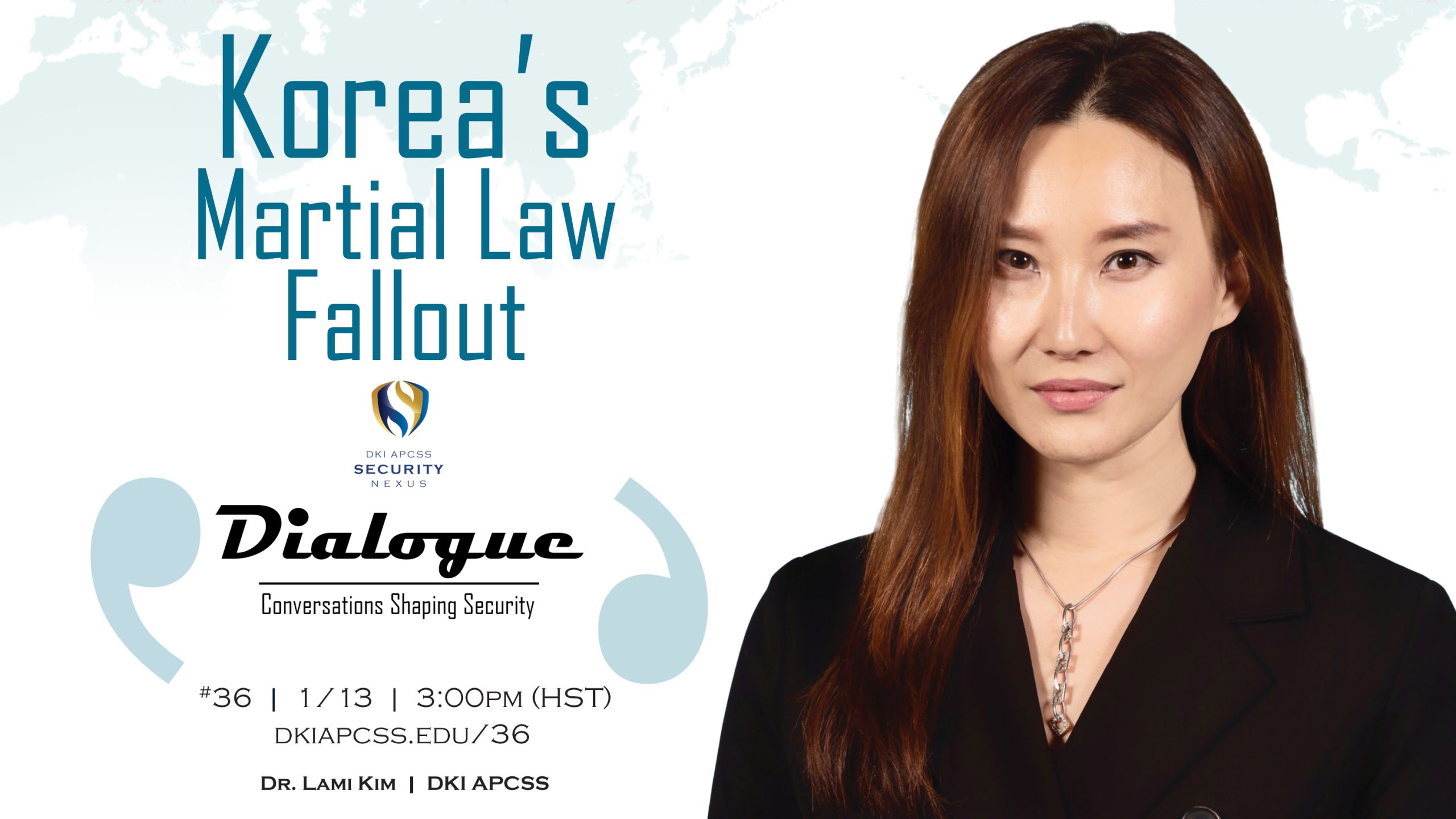
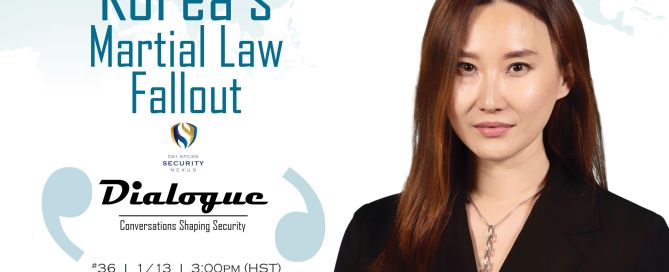
Dialogue #36 Korea’s Martial Law Fallout

South Korea, often hailed as a beacon of democracy in Asia, finds itself navigating a profound political crisis that has raised questions about its democratic stability and governance. The impeachment of President Yoon Suk-yeol following his December 3rd declaration of martial law has sent shockwaves across the nation and the region. While the swift response from South Korea’s institutions and the public demonstrates the strength of its democratic framework, the crisis also highlights vulnerabilities that demand attention.
By |2025-12-09T13:03:18-10:00December 21, 2024|Categories: news, Dialogue Podcast|Tags: |

TSC bring senior leaders together to explore opportunities for cooperation

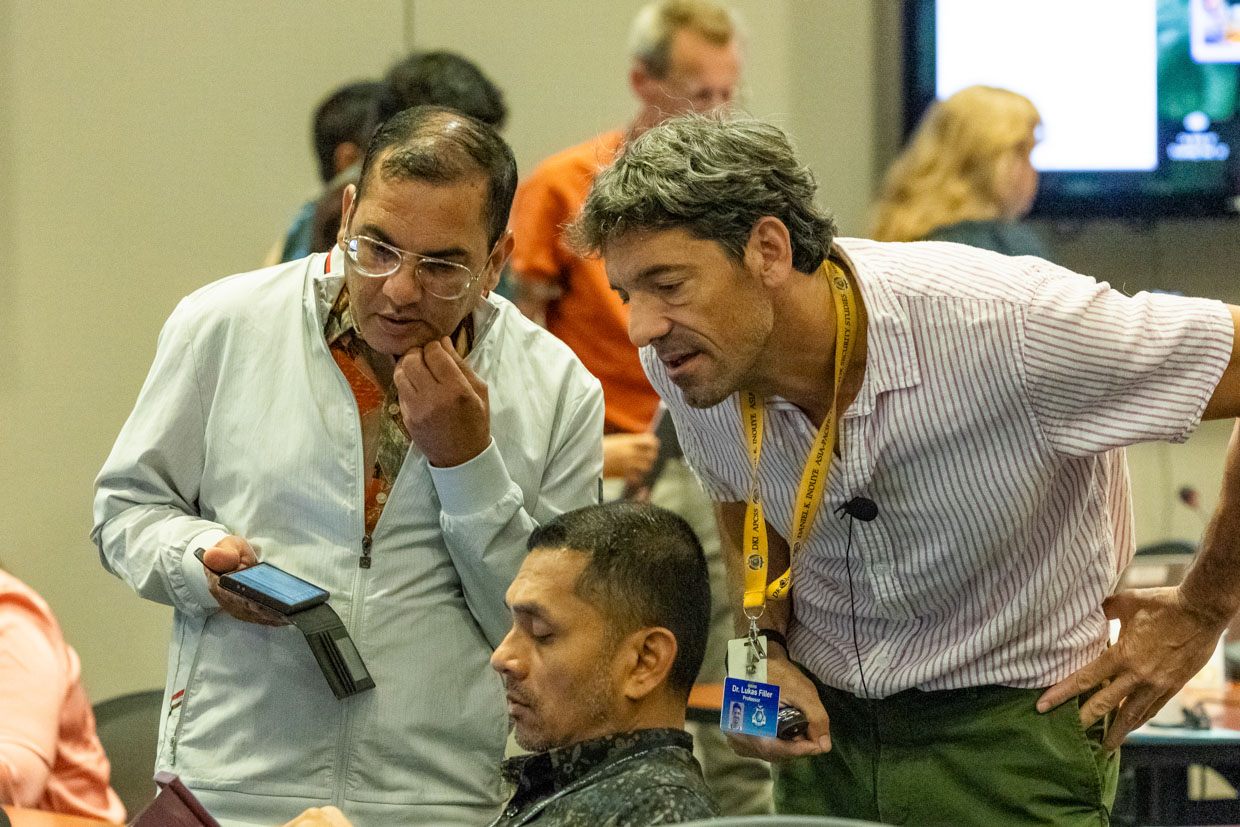
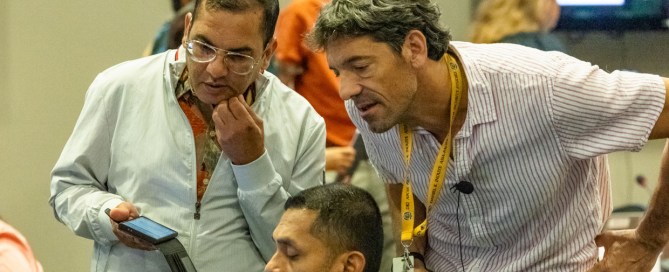
The Transnational Security Cooperation course is an in-depth executive education program designed to prepare senior security practitioners and military leaders to engage in cooperative security efforts that advance a free and open Indo-Pacific. Recently 38 senior leaders from 25 countries and three regional organizations participated in the TSC24-2 course hosted by the Daniel K. Inouye Asia-Pacific Center for Security Studies from December 8-13, 2024, in Honolulu. “Aided by a challenging curriculum, TSC 24-2 participants seized the opportunity to frankly discuss some of the most pressing strategic issues in the Indo-Pacific,” said course manager Dr. Al Oehlers. “Vitally, by exchanging invaluable insights and creatively crafting collaborative approaches to shared priorities, bonds of understanding and friendship were fostered that will last for years to come.”

By |2025-12-09T13:03:18-10:00December 18, 2024|Categories: Courses, College, news, Media|Tags: , , , |

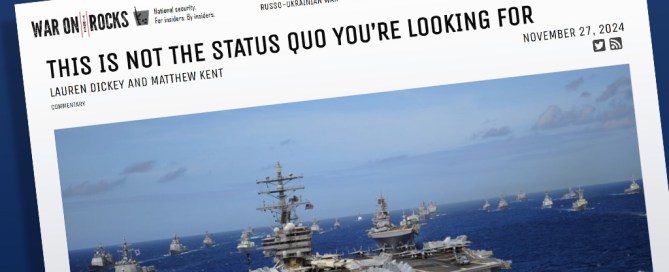
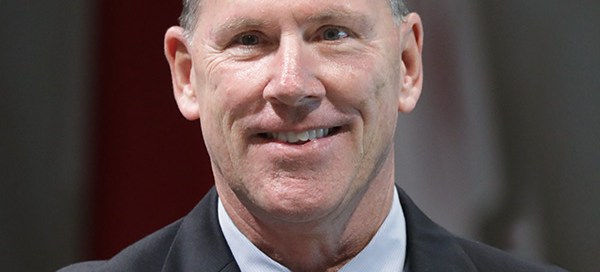
Lauren Dickey and DKI APCSS’ Col. Matthew Kent Call for a Reassessment of U.S. Policy on Taiwan in War on the Rocks

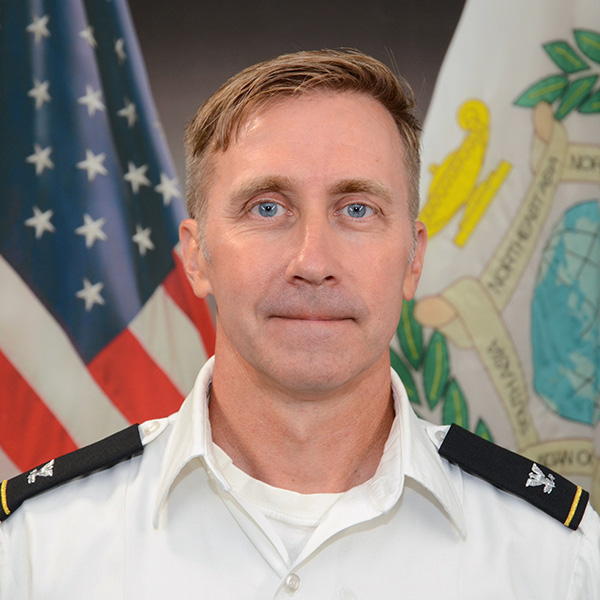
“This is Not the Status Quo You’re Looking For” by Lauren Dickey and DKI APCSS’ Col. Matthew Kent was recently published by War on the Rocks. In the article, the authors argue that the United States’ longstanding policy of maintaining the “status quo” on Taiwan is increasingly misaligned with contemporary geostrategic realities. Rooted in Cold War-era agreements, the policy aims to deter hostilities by avoiding an official stance on Taiwan’s sovereignty. However, this approach has not accounted for China’s use of gray zone tactics—subtle, coercive measures that fall short of provoking military conflict but aim to achieve political objectives.  According to the authors,  the “status quo,” once effective in a very different geopolitical landscape, now risks enabling China’s aggressive posturing and undermining Taiwan’s security.

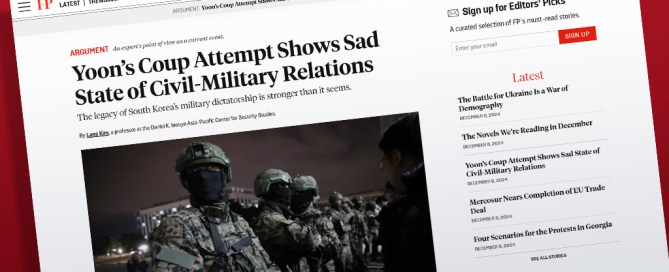
Coups and Civil-Military relations in South Korea

Dr. Lami Kim has a new article in Foreign Policy on the recent self-coup and martial law attempt by President Yoon in South Korea.  The article, “Yoon’s Coup Attempt Shows Sad State of Civil-Military Relations,” provides an in-depth look the Republic of Korea’s history of past military dictatorship. According to Kim, “As South Koreans and supporters of democracy around the world anxiously watch how this situation unfolds, it is crucial to learn from what happened. This incident serves as a stark reminder that civil-military relations are never static and can regress without vigilant management. If there is a silver lining to this situation, it is that South Koreans now have an opportunity to confront the lingering legacies of military dictatorship and take definitive steps toward establishing healthy, sustainable civil-military relations.”

Go to Top