

Preface
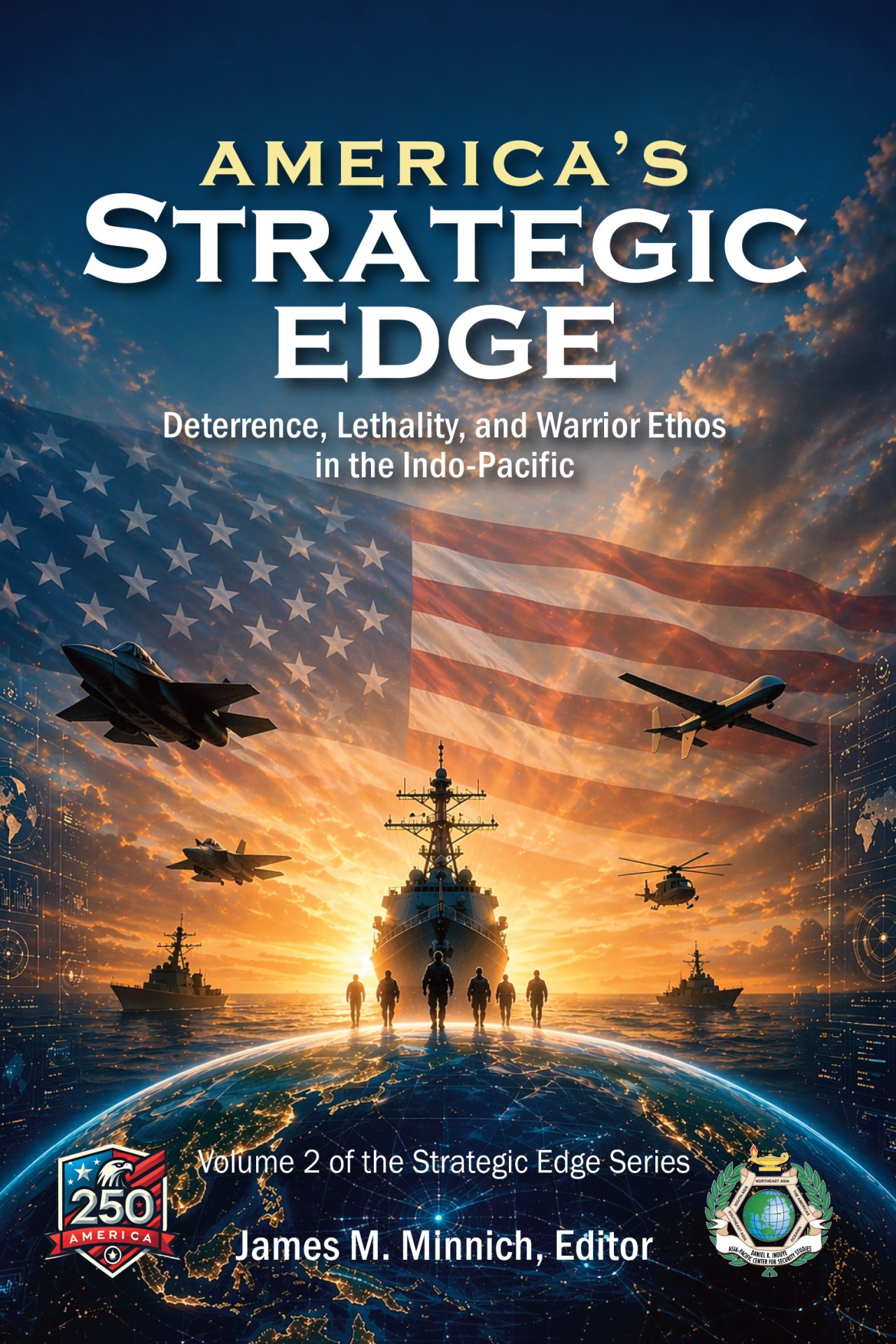
The Indo-Pacific security architecture is undergoing its most significant transformation since the end of the Second World War. As the United States and its partners navigate this era of competitive multipolarity, the requirement for rigorous strategic assessment of military and national power has never been greater. America’s Strategic Edge: Deterrence, Lethality, and Warrior Ethos in the Indo-Pacific seeks to provide that assessment by examining the interconnected pillars that sustain America’s strategic edge and regional stability.
This volume, the second in the Strategic Edge series, opens with an introductory chapter that traces the historical throughline of America’s engagement in the Pacific and establishes the conceptual foundation for the edge that endures. The chapters that follow are organized into three reinforcing parts:
Part 1: Deterrence (Chapters 2–7)
explores the multi-dimensional nature of modern prevention. From gray-zone competition to the enduring logic of maritime and nuclear stability, these chapters argue that a credible architecture of advantage depends as much on economic and industrial strength as on forward military presence.
Part 2: Lethality (Chapters 8–11)
examines the changing character of warfare. In an era defined by algorithmic speed and multi-domain operations, these contributions assess how seizing the orbital high ground and revitalizing allied industrial capacity are essential to maintaining a decisive edge in high-end conflict.
Part 3: Warrior Ethos (Chapters 12–16) a
ddresses the enduring human dimension. Technology remains a force multiplier, but it is not a substitute for leadership. These chapters explore responsibility in machine-age warfare and the continuity of warrior tradition, asserting that the ultimate strategic edge lies in the character and disciplined judgment of the leader.
By bringing together scholars and practitioners, this volume offers a holistic view of the challenges shaping the Indo-Pacific. It is intended for strategists, operators, and students of security alike—those who understand that preserving peace in the twenty-first century requires continuous adaptation, credible lethality, and an unwavering ethical foundation.
A Word of Thanks
This volume reflects the intellectual rigor of our contributing authors and the steadfast support of the DKI APCSS community. I am deeply grateful for their scholarship, their service, and their example.
Dr. James M. Minnich,
Colonel, U.S. Army (Ret.)
Honolulu, Hawai‘i | April 23, 2026


