

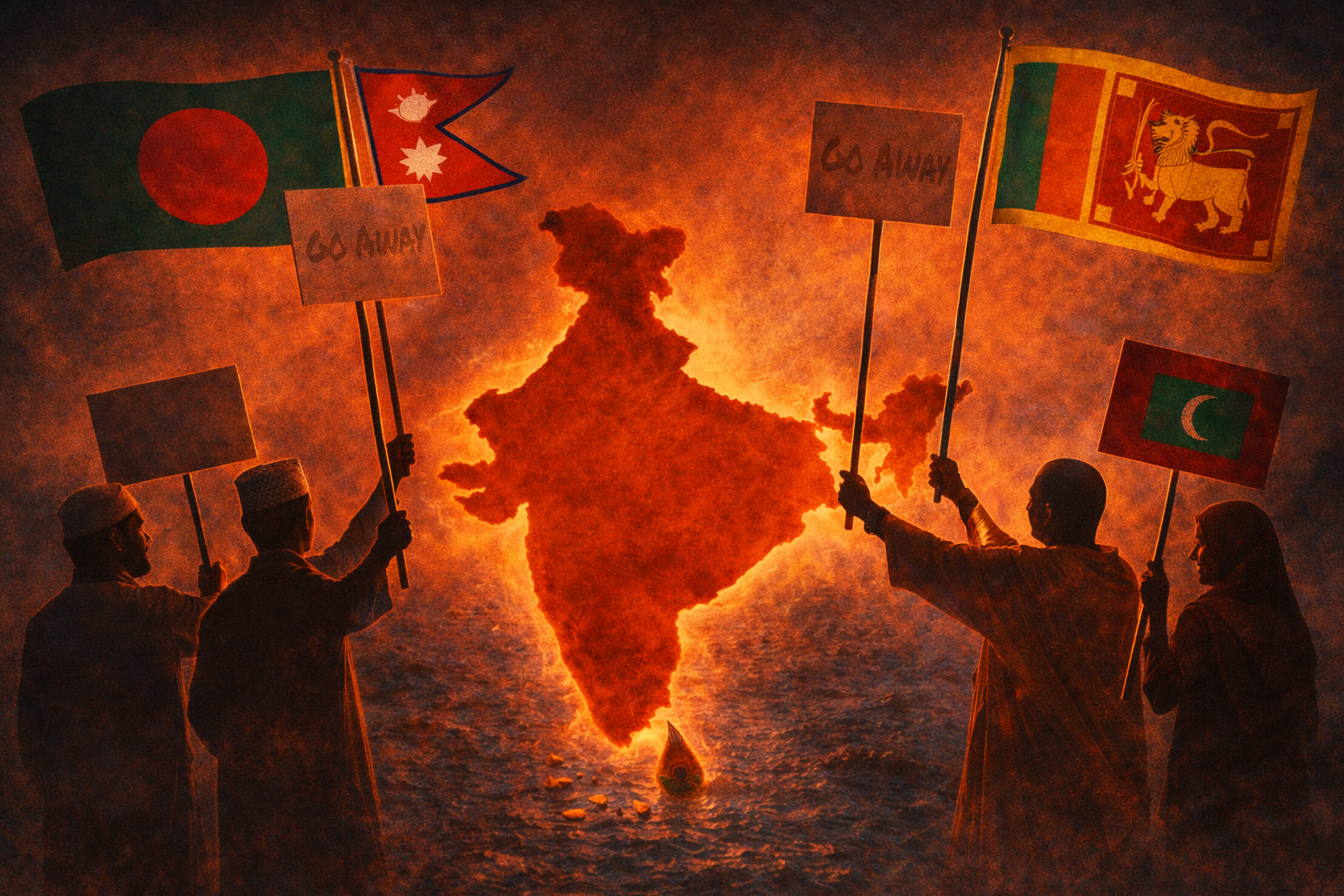
Launched in 2014, India’s Neighborhood First policy sought to stabilize South Asia through proximity and engagement.
In this Security Nexus Perspective, DK APCSS Professor Shyam Tekwani argues that recurring “India Out” protests are not ideological rejections of cooperation but reflexive responses to proximity itself, shaped by historical memory, asymmetry, and media amplification. Drawing on cases from Bangladesh, the Maldives, Nepal, and Sri Lanka, the essay shows how India’s structural presence can generate unease that media narratives rapidly convert into external blame.
The piece underscores the need for restraint in spectacle and attentiveness to perception, reminding policymakers that regional influence is felt as much through memory and interpretation as through policy intent.
For deeper insights into South Asia’s evolving dynamics, read the full essay:
Proximity, Perception, and Pushback in South Asia
The full linked article was researched and written by the author. This post includes only a summary and imagery generated with the assistance of artificial intelligence, which were reviewed and edited by DoD personnel to ensure appropriateness and compliance with DoD policies and guidance.




Leave A Comment