

Fellow Project is an integral part of DKI APCSS’s long courses. It requires participants to undertake a project demonstrating their expertise by applying their acquired knowledge and skills. This process includes:
- Collaboration and Networking: Fellows work together and engage with faculty and experts, fostering relationships and mutual understanding.
- Perspective Sharing: Discussing local, national, and regional security challenges enhances networks and deepens understanding of a rules-based order and a free and open Indo-Pacific region.
- Research and Analysis: Fellows leverage their experience to research a specific topic, increasing situational awareness, creating viable options, and forming practical recommendations through critical thinking.
- Expand capacity for critical thinking
- Practice querying, dialogue, cooperation, and connecting with key stakeholders
- Hone inquiry skills for future work
- Produce outcomes of real-world value
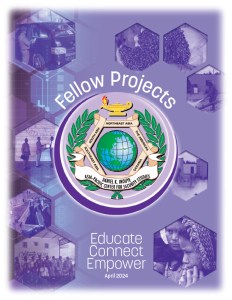
Read the latest fellow’s project booklet to celebrate their achievements and discover how their work fosters a secure and prosperous region.
- Individual Fellow Project: Each fellow undertakes a project focusing on a specific challenge related to a policy, program, process, or practice. This project is completed independently, allowing the fellow to apply their unique insights and expertise.
- Cohort Project (Group Project): In this format, fellows collaborate on a group project. To participate in a Cohort Project, each fellow must be preselected by their respective country’s embassy and DKI APCSS. This collaborative approach encourages teamwork and leverages the diverse perspectives of the fellows involved.
* If your country wishes to send a team to work on a Cohort Project, inform the US Embassy, the DKI APCSS Recruiter (recruiter@apcss.org), and the Fellow Project Team (fellowsproject@dkiapcss.net).
Fellow Project Highlight
Project Phases
| Fellows Project | Cohort Projects | |
|---|---|---|
| Before Course |
|
|
| During Course |
|
|
| After Course |
|
|
Latest News and Guest Speakers
Alumni Perspectives: Post-Arbitration Diplomatic Engagement and Negotiated Agreement Between Philippines and China
An alumna of DKI APCSS’ Advanced Security Cooperation course (2012-1), Ananda Devi Domingo-Almase, DPA, has written a research paper on “Diplomatic Engagement and Negotiated Agreement Between Philippines and China: A Constructive-Realist Approach in Post-Arbitration.” This [...]
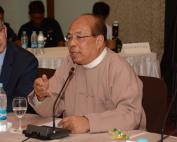
DKI APCSS hosts Media Relations in Crisis and Conflict Dialogue in Myanmar
A total of 36 Myanmar participants from 20 ministries, agencies, universities, the Myanmar Red Cross Society, media organizations and members of the Union Parliament attended the two-day event to learn more about crisis [...]
Decisions That Bind: The Role of Reputation Costs in Territorial Disputes
Hyunki Kim, a former intern at the Daniel K. Inouye Asia-Pacific Center for Security Studies Reputation costs and how they impact settlements for territorial deputes is the topic of a paper written by [...]
Alumni Perspectives: Freedom of the Press in Vietnam and Laos
How do the expanding economic opportunities in communist countries impact freedom of the press? Tjipta Lesmana Tjipta Lesmana, an alumnus of the Transnational Security Cooperation (TSC16-1) course and professor at Universitas Pelita Hatrapan [...]
SEAPOC provides senior leaders with overview of key Asia-Pacific security issues
Forty-one Fellows took part in the Oct. 4 to 6 Senior Executive Asia-Pacific Orientation Course 16-1 at the Daniel K. Inouye Asia-Pacific Center for Security Studies. Forty-one senior leaders received a comprehensive look [...]
U.S., international Fellows build counterterror capacity at DKI APCSS
One hundred seven U.S. and international Fellows attended the Comprehensive Security Responses to Terrorism course (CSRT 16-1) July 14 to Aug. 10 at the Daniel K. Inouye Asia-Pacific Center for Security Studies. The course [...]


