

New Security Nexus Perspective: The Cage of Equidistance
India’s bid to remain equidistant between Russia, China, and the U.S. is no longer sustainable. This Security Nexus article explores how strategic autonomy risks becoming constraint.
May 24, 2011
India’s bid to remain equidistant between Russia, China, and the U.S. is no longer sustainable. This Security Nexus article explores how strategic autonomy risks becoming constraint.
Dr. Lumpy Lumbaca, a counterterrorism expert and faculty member at the Daniel K. Inouye Asia-Pacific Center for Security Studies, explores how Iran has quietly extended its terrorism and insurgency campaigns into the Indo-Pacific in a new Security Nexus article, Iran’s Terrorism and Insurgency in the Indo-Pacific: Implications for the U.S. and Its Partners. Despite its limited recognition as a regional threat, Iran has used proxy networks and covert operations to target Israeli interests across the region for decades. From attempted embassy bombings and airline plots to the use of forged passports and illicit arms shipments, the article details how these actions support Iran’s broader strategy of asymmetric warfare aimed at destabilizing its adversaries.
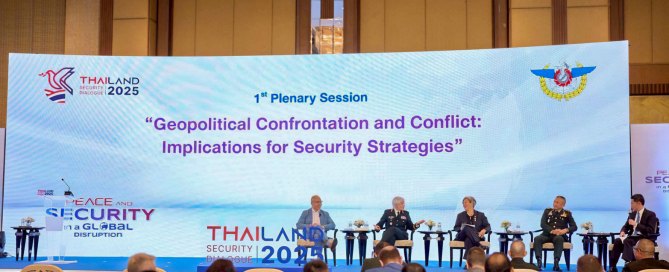
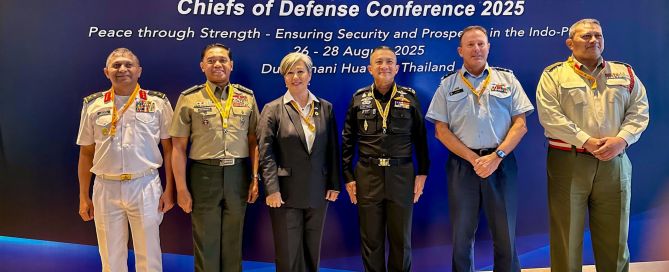
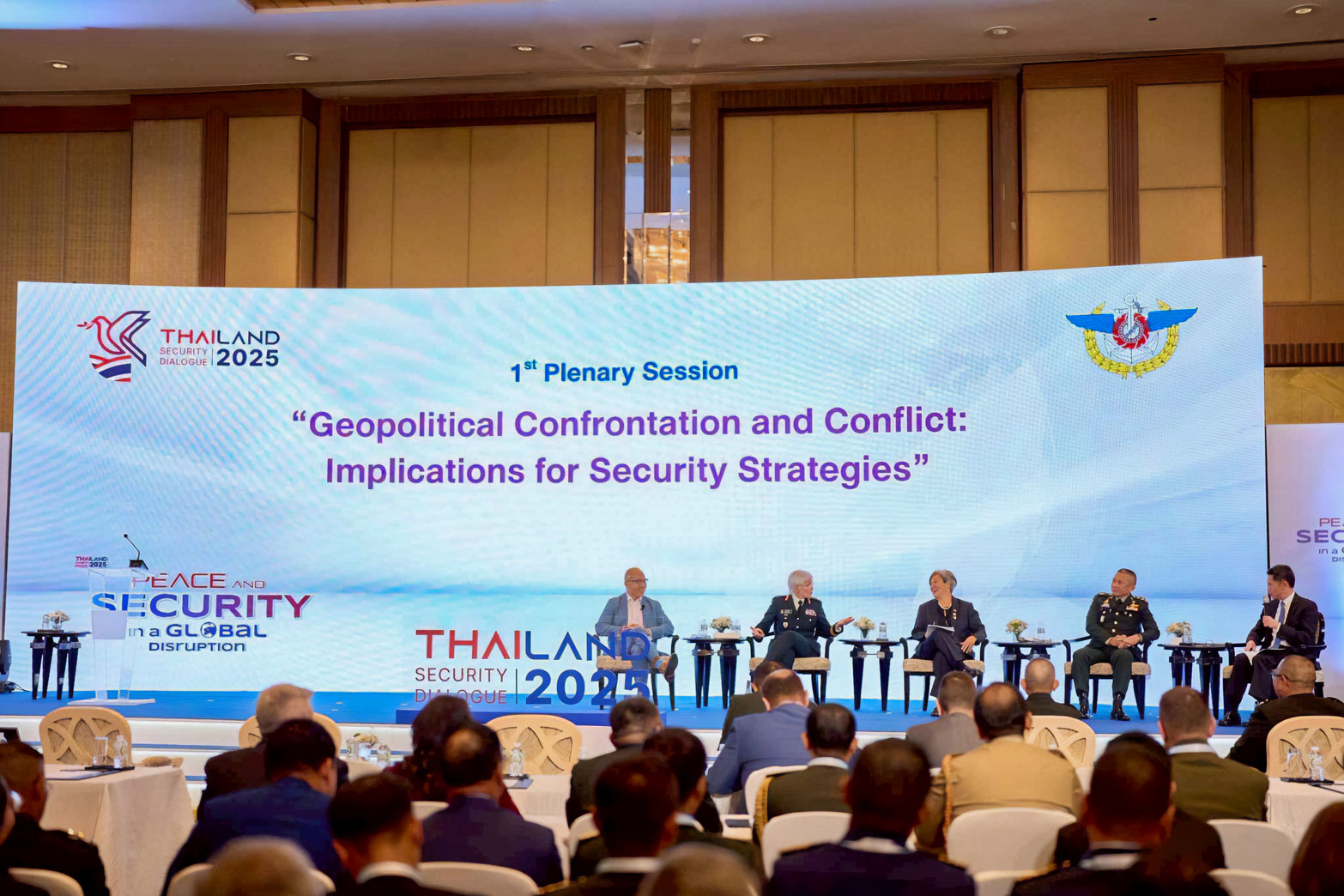
DKI APCSS Director Suzanne Vares-Lum moderated the 27th Indo-Pacific Chiefs of Defense Conference in Thailand, highlighting alumni leadership and regional security cooperation.
DKI APCSS Director Suzanne Vares-Lum moderated the 27th Indo-Pacific Chiefs of Defense Conference in Thailand, highlighting alumni leadership and regional security cooperation.
Dr. Clint Work joins Dialogue Episode 50 to examine the future of the ROK-U.S. alliance, focusing on OPCON transfer, deterrence, and Seoul's role in regional security.
Daniel K. Inouye Asia-Pacific Center for Security Studies Associate Dean of Academics Dr. Deon Canyon has authored a new article in Security Nexus titled “Adaptive Power Helps the U.S. Defense Industrial Base Become a Tool of Deterrence.” His paper argues that as strategic competition with China intensifies, the U.S. Defense Industrial Base (DIB) must shift from a reactive supplier to a proactive tool of deterrence and influence. Using the Adaptive Power framework, the article reimagines the DIB as a sovereignty-aligned asset that supports U.S. strategic objectives through five operational pillars: timing, context, legitimacy, modularity, and learning.
The article discusses the concept of rationality and its evolution, the state of the art on state rationality, and the strategic thinking of 14 states in the Indo-Pacific, including the United States, China, Russia, Japan, India, South Korea, Taiwan, Vietnam, Thailand, Malaysia, Singapore, Indonesia, Australia, and New Zealand.
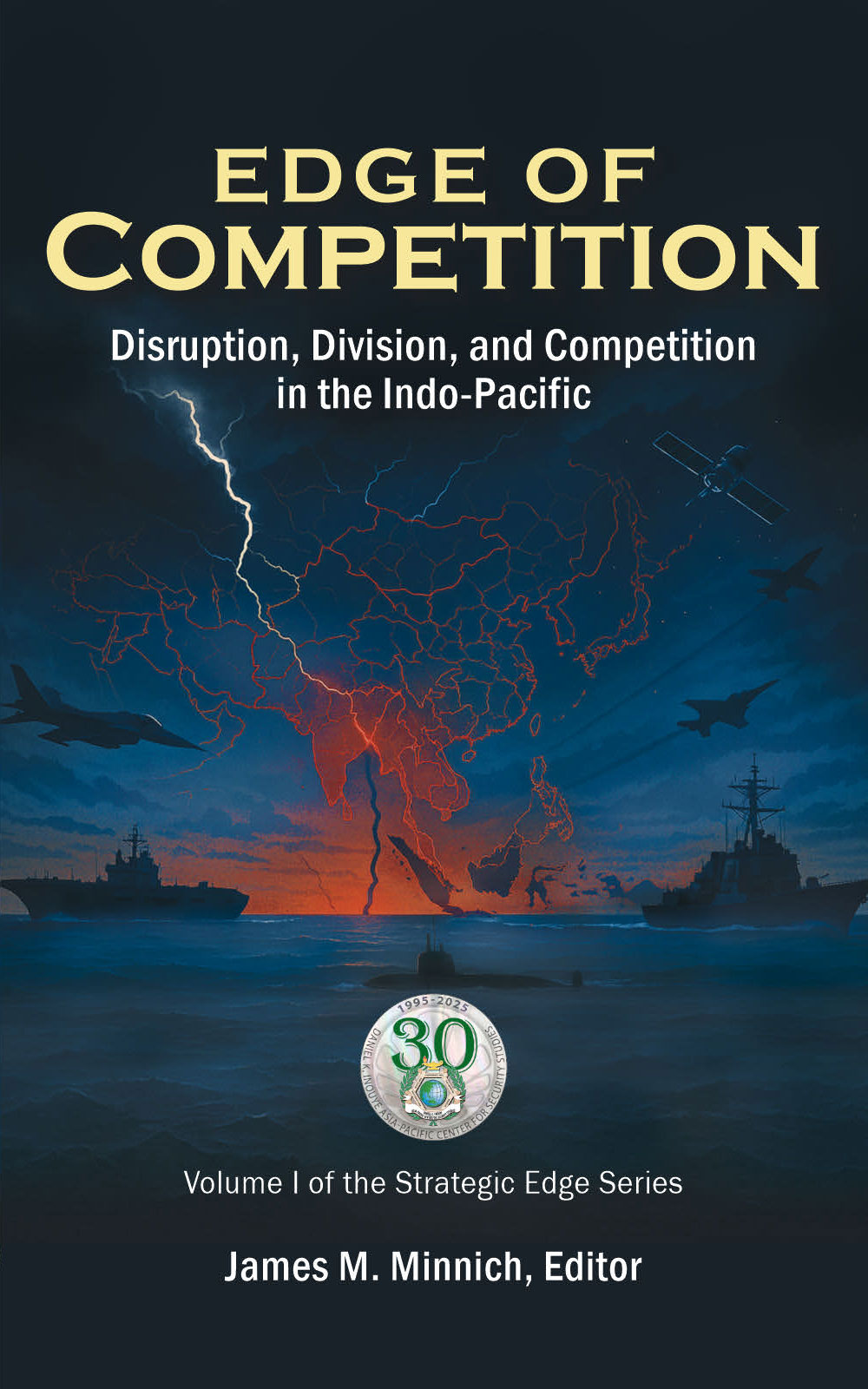
Edge of Competition Main Page Afterword The Edge of Advantage James M. Minnich The Indo-Pacific is not on the verge of change—it is already in the throes of it. Edge of Competition is a guide for navigating this [...]
Edge of Competition Main Page The Indo-Pacific has entered an era of intensified complexity. Strategic tremors now travel faster. Fault lines run deeper. The contest for advantage now spans every domain, from seabed cables that bind our [...]


1600 Amphitheatre Parkway New York WC1 1BA
Phone: 1.800.458.556 / 1.800.532.2112
Fax: 458 761-9562
Email: info@your-domain.com
Web: ThemeFusion