
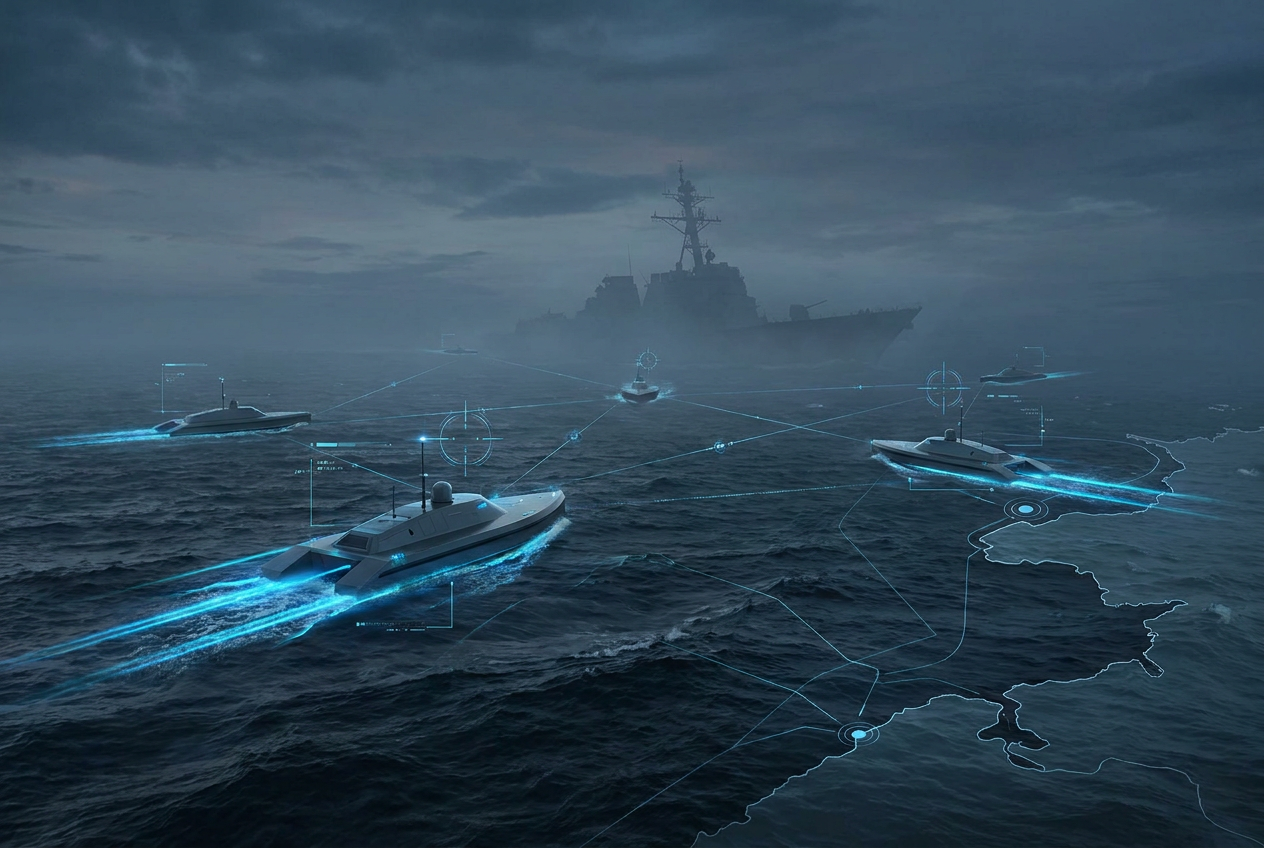
A new Security Nexus Perspective by Moe Reichardt, intern at the Daniel K. Inouye Asia-Pacific Center for Security Studies, examines how Ukraine’s pioneering use of uncrewed surface vehicles (USVs) in the Black Sea can inform Taiwan’s asymmetric maritime defense against potential Chinese coercion.
In “Towards a Layered Denial Strategy: Lessons from the Black Sea for Taiwan,” the author outlines three plausible scenarios for Chinese action against Taiwan—direct invasion, limited maritime quarantine, and full naval blockade—and analyzes how Ukraine’s low-cost, adaptable, and networked maritime drones challenged a conventionally superior Russian navy, disrupted blockade efforts, and reshaped the maritime battlespace. While recognizing key differences between the Black Sea and the Taiwan Strait, the paper argues that Taiwan should integrate USVs into a broader “layered denial strategy” designed to restrict the PLA Navy’s freedom of maneuver, complicate blockade enforcement, raise the costs of amphibious operations, and buy time for allied intervention.
Read the full paper on Security Nexus.
The full linked article was researched and written by the author. This post includes only a summary and imagery generated with the assistance of artificial intelligence, which were reviewed and edited by DoD personnel to ensure appropriateness and compliance with DoD policies and guidance.


Leave A Comment