
May 24, 2011

News

Security Nexus Perspective: A Framework for Understanding Cognitive Security as Strategic Terrain

A new Security Nexus Perspective, “Framework for Understanding Cognitive Security as Strategic Terrain,”by Dr. Deon K. Canyon, associate dean of academics and professor at the Daniel K. Inouye Asia-Pacific Center for Security Studies, provides an in-depth look at how adversaries weaponize perception, trust, and decision-making to shape strategic outcomes in modern conflict. The article highlights the growing importance of cognitive security in the Indo-Pacific region, where artificial intelligence, synthetic media, and information operations are increasingly used to influence alliances and complicate crisis response. Explore this timely and thought-provoking analysis to gain a deeper understanding of the challenges and opportunities in navigating contested cognitive terrain.
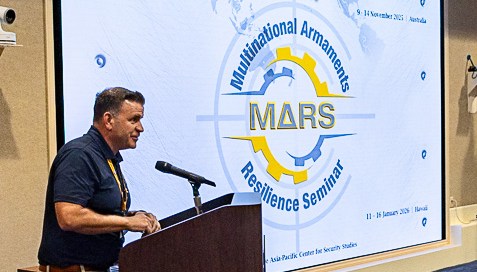

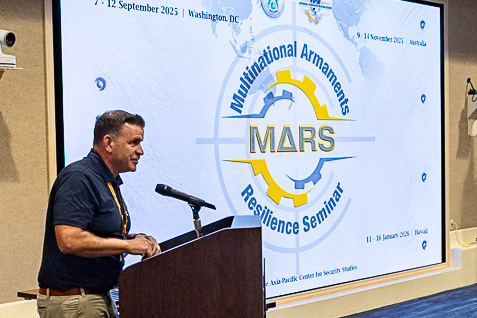
Forging the Future of Indo-Pacific Defense: The Inaugural Multinational Armaments Resilience Seminar (MARS)

DKI APCSS concludes its inaugural Multinational Armaments Resilience Seminar, strengthening Indo-Pacific defense industrial base resilience through multinational collaboration and partnerships.

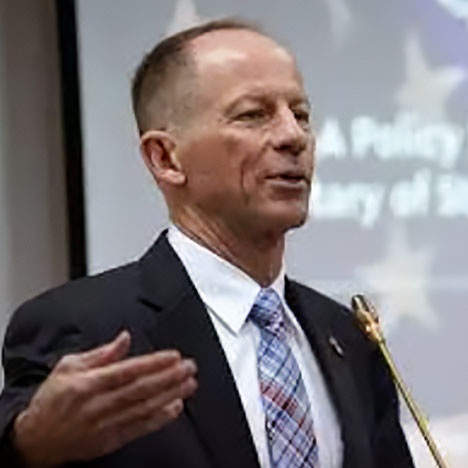
David R. Stilwell

David R. Stilwell served as the Assistant Secretary of State for the Bureau of East Asian and Pacific Affairs from 2019 to 2021. Prior to that, he served in the Air Force for 35 years, beginning as an enlisted Korean linguist in 1980, and retiring in 2015 in the rank of Brigadier General as the Asia advisor to the Chairman of the Joint Chiefs. He served multiple tours of duty in Japan and Korea as a linguist, a fighter pilot, and a commander. He also served as the Defense Attaché at the U.S. Embassy in Beijing, People’s Republic of China, 2011-2013. He earned a B.S. in History from the U.S. Air Force Academy (1987), a Master’s Degree in Asian Studies and Chinese language from the University of Hawaii at Manoa (1988) as an East-West Center participant.

By |2026-02-09T12:07:42-10:00February 9, 2026|Categories: Distinguished Adjunct|

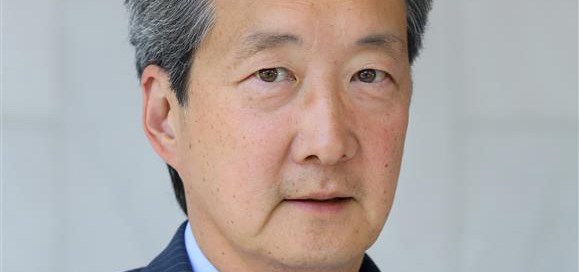
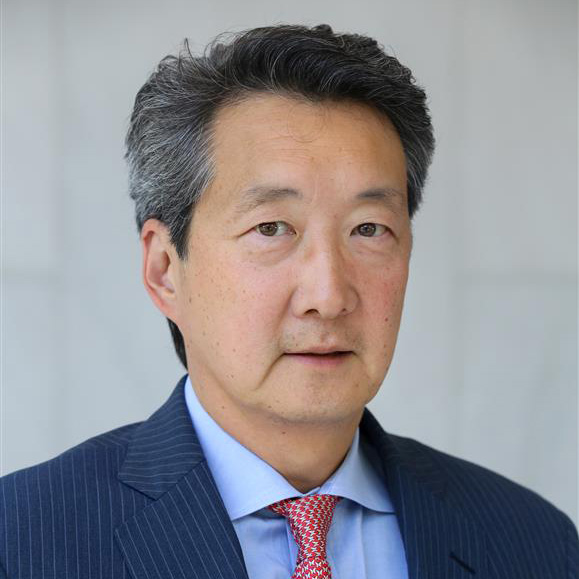
Victor D. Cha

Ambassador John T. Hennessey-Niland is the former U.S. ambassador to Palau. With a 35-year career in the Foreign Service, he is one of the most experienced "Pacific hands" to serve in the Department of State. He has held multiple posts in the Indo-Pacific, including Fiji, Australia, and Hawaii, where he served as the foreign policy advisor (POLAD) to the commander of U.S. Marine Corps Forces Pacific. His other assignments include serving on the National Security Council as a director responsible for international summits, as a United Nations war crimes investigator in the former Yugoslavia and Rwanda, and at several embassies in Europe, including Paris (twice), Dublin, and The Hague.

By |2026-02-13T17:02:31-10:00February 4, 2026|Categories: Distinguished Adjunct|

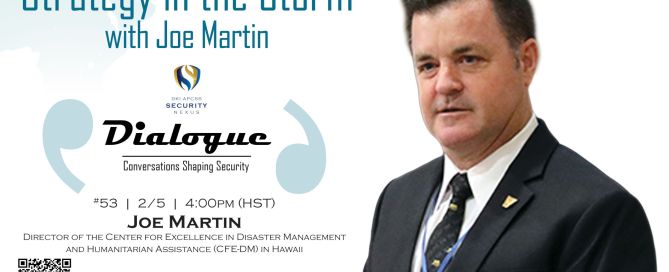
Dialogue | Episode 53: Strategy in the Storm – Disaster Response as a Test of Indo-Pacific Partnerships

Joe Martin, Director of CFE-DM, explains why disaster response is a strategic stress test of Indo-Pacific partnerships. In this Dialogue Episode 53 discussion, Martin reveals how real resilience is built through practiced coordination, trusted relationships, and localized leadership, not improvised when the storm hits.

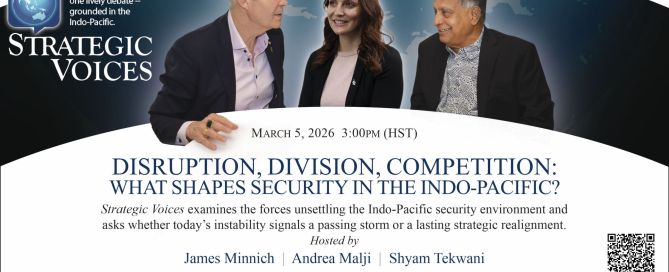
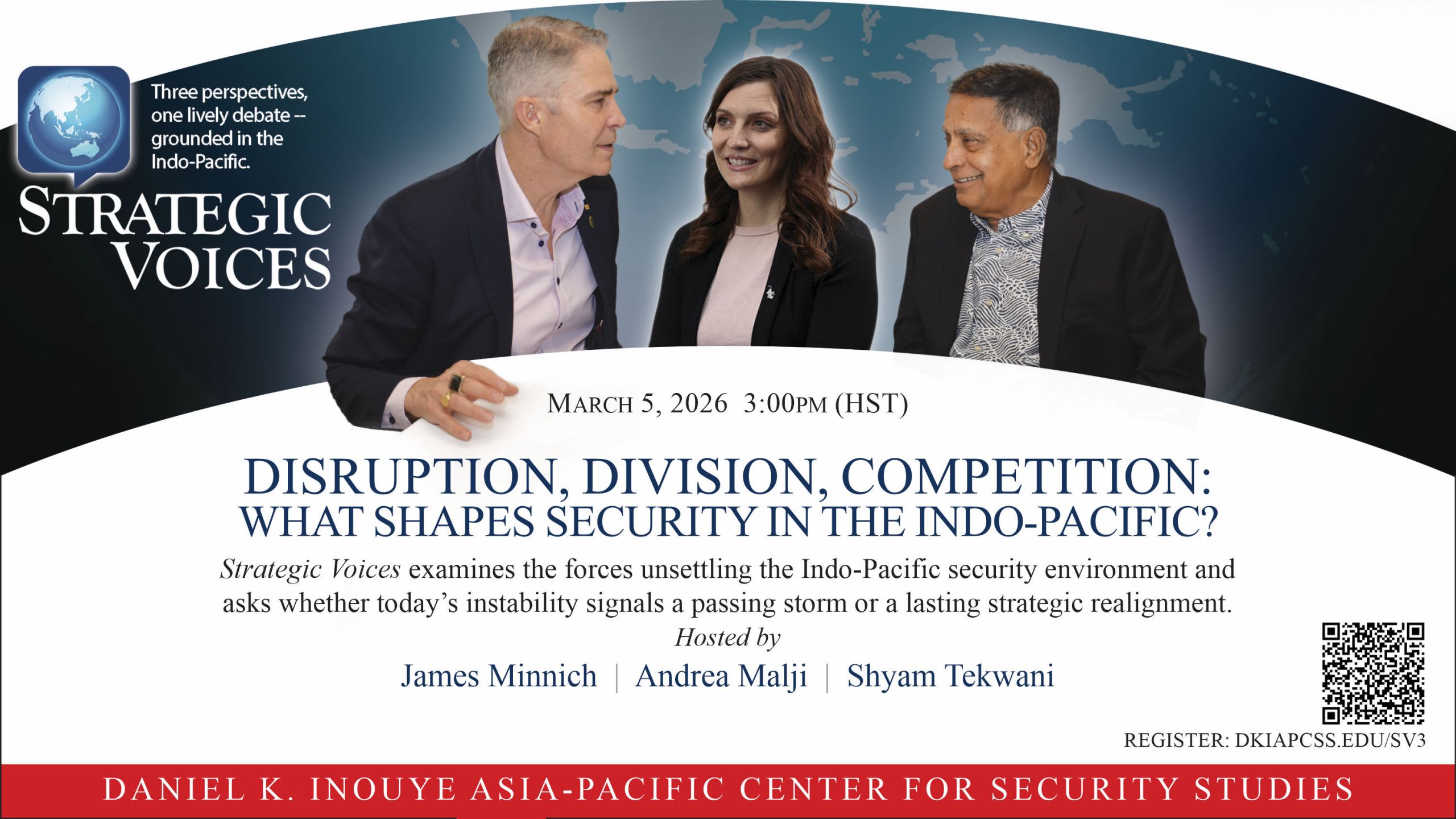
Join us for Episode 3 of Strategic Voices: Disruption, Division, Competition: What Shapes Security in the Indo-Pacific?

Strategic Voices examines the forces unsettling the Indo-Pacific security environment and asks whether today’s instability signals a passing storm or a lasting strategic realignment.

By |2026-03-12T13:34:15-10:00January 27, 2026|Categories: news, Upcoming|

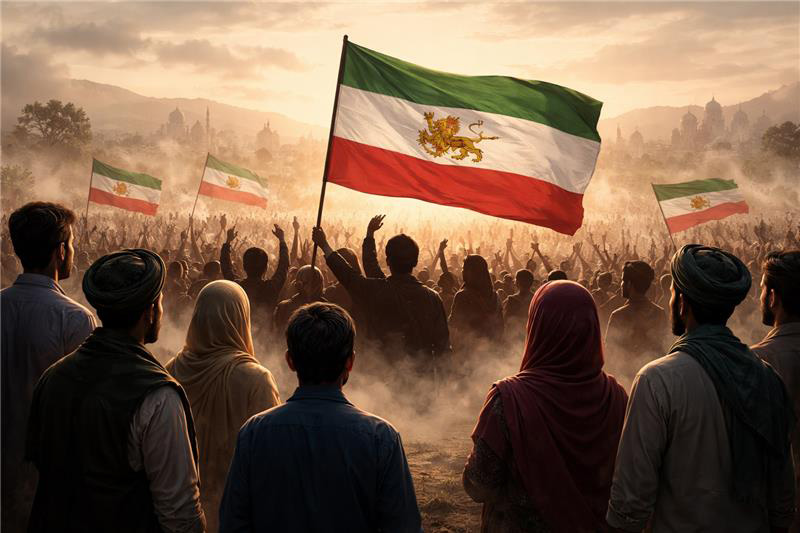
Security Nexus Perspective: When Distance Collapses – Iran’s Crisis and the Geography of India’s Constraints

Explore the critical intersections of geopolitics, energy security, and maritime risk in a new Security Nexus Perspective by DKI APCSS Professor Shyam Tekwani, titled "When Distance Collapses: Iran’s Crisis and the Geography of India’s Constraints." This analysis examines the evolving dynamics between India and Iran, emphasizing the strategic implications of sanctions, instability, and shifting trade routes in the Persian Gulf and Strait of Hormuz. With a focus on energy markets, the Indo-Pacific, and the strategic role of Chabahar Port, the paper offers essential insights into how regional instability affects global security frameworks.

By |2026-01-27T09:11:03-10:00January 26, 2026|Categories: news, Security Nexus, Tekwani|Tags: |

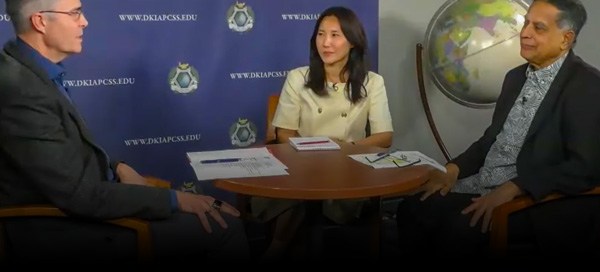
Strategic Voices Episode 2: Korea’s Nuclear-Powered Submarine Plans—Capability, Signal, or Stress Test?

South Korea’s renewed interest in nuclear-powered attack submarines (SSNs) is often framed as a prestige-driven pursuit. In Episode 2 of Strategic Voices, Professors James Minnich, Shyam Tekwani, and Lami Kim moved beyond that shorthand to ask a harder question: what would SSNs actually change for deterrence, alliance dynamics, and the stability of Northeast Asia—if South Korea proceeds

By |2026-01-27T09:06:32-10:00January 21, 2026|Categories: news, Podcast|Tags: , , , , |

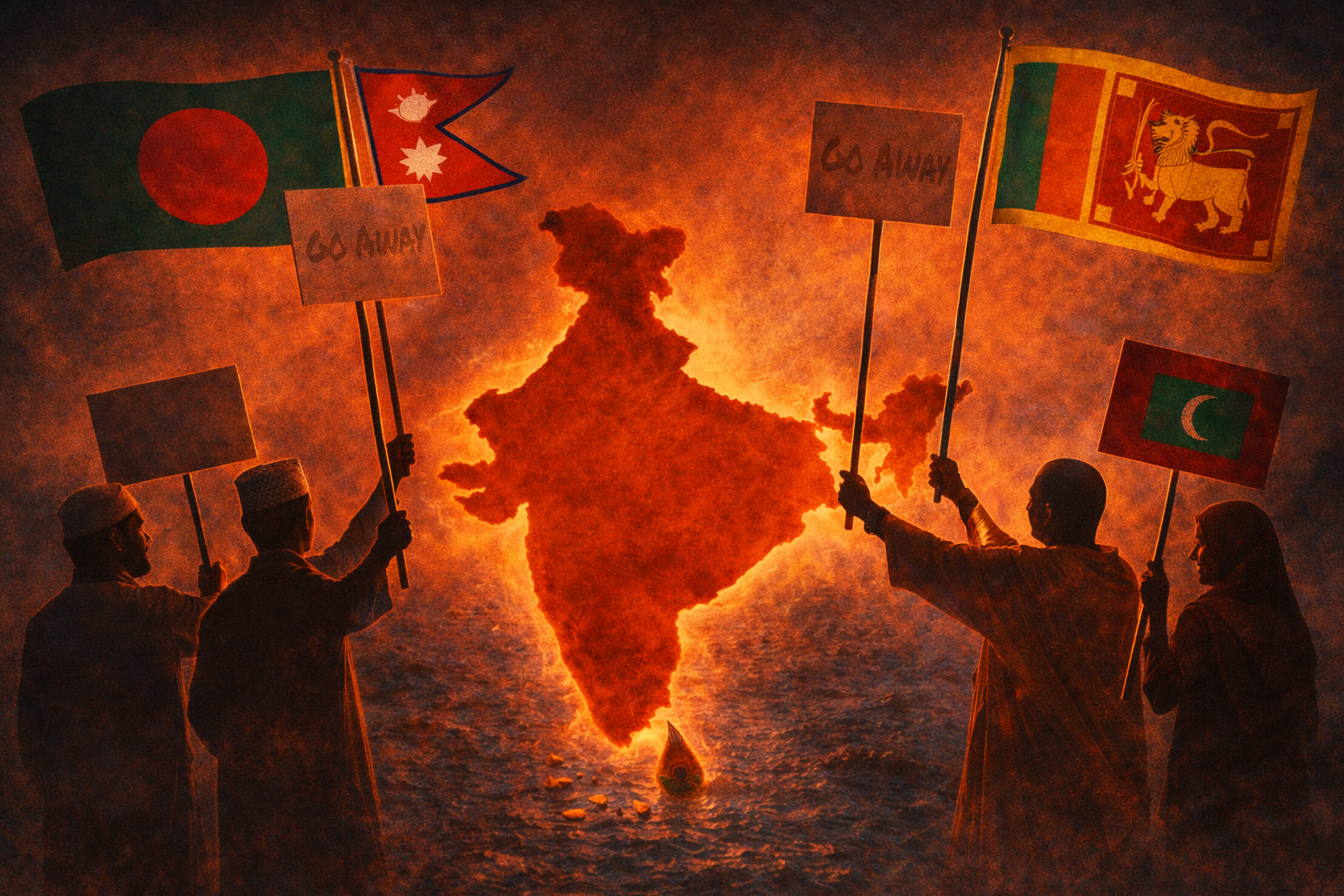
Security Nexus Perspective: Proximity, Perception, and Pushback in South Asia

Launched in 2014, India’s Neighborhood First policy sought to stabilize South Asia through proximity and engagement. In this Security Nexus Perspective, DK APCSS Professor Shyam Tekwani argues that recurring “India Out” protests are not ideological rejections of cooperation but reflexive responses to proximity itself, shaped by historical memory, asymmetry, and media amplification. Drawing on cases from Bangladesh, the Maldives, Nepal, and Sri Lanka, the essay shows how India’s structural presence can generate unease that media narratives rapidly convert into external blame.

Scott Handler

Scott Handler is a professor of cyber studies and emerging technology at the George C. Marshall Center, focusing on issues related to artificial intelligence, cyber risks to national security, international digital trade and investment, and privacy and data protection. Before joining the Marshall Center, Handler was the head of strategic process and programs at Meta, where he led operational excellence efforts for machine learning and artificial intelligence product and data operations, customer experience, and trust and safety (integrity) teams that supported the end-to-end product development lifecycle for users across the Facebook app, Instagram, Messenger, and Reality Labs products. Previously, he was vice president of strategy and partnerships and chief information security officer at WireWheel, a privacy tech company that helps organizations manage their data privacy practices.

Go to Top