
Philippines Alumni Workshop on Strategic Scenarios and Signals
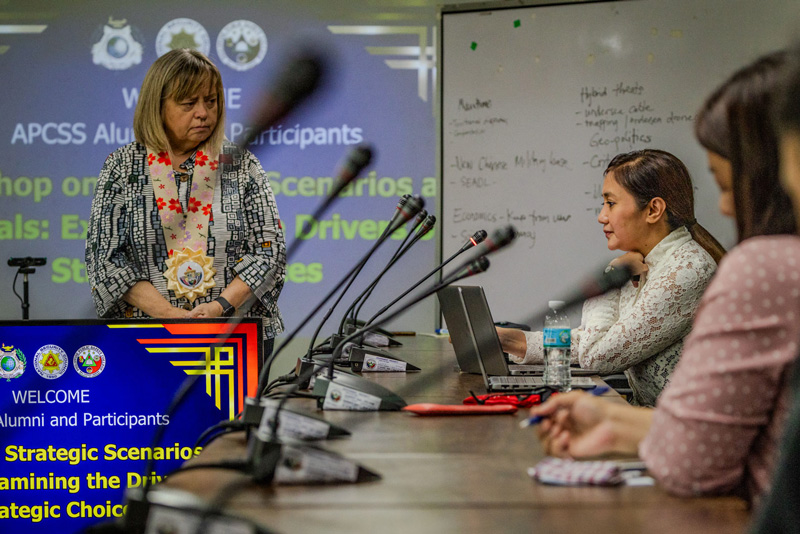
DKI APCSS hosts a successful alumni workshop in the Philippines on strategic scenarios, strengthening partnerships and discussing Indo-Pacific security with key officials.
By APCSS Editor|2026-02-25T12:31:36-10:00February 25, 2026|Categories: Workshops/Events, news|Tags: Indo-Pacific, defense, Philippines, regional security, Security Cooperation, alumni workshop, strategic scenarios, National Security Council, alliances|
DKI APCSS hosts a successful alumni workshop in the Philippines on strategic scenarios, strengthening partnerships and discussing Indo-Pacific security with key officials.
By APCSS Editor|2026-02-19T17:31:05-10:00February 19, 2026|Categories: news, Engagements|Tags: Cybersecurity, Indo-Pacific, Nepal, DKI APCSS, Security Cooperation, regional stability, alumni network, crisis response, mentoring, Laulima|
DKI APCSS recently conducted key leader engagements in Kathmandu, Nepal, highlighting the nation’s strategic role in regional stability. DKI APCSS Director Suzanne Vares-Lum joined Adm. Samuel Paparo, commander of U.S. Indo-Pacific Command, to meet with senior Nepali leaders and U.S. Embassy partners. Discussions focused on shared security priorities, including disaster preparedness, humanitarian assistance, and Nepal’s contributions to peacekeeping operations. The visit also celebrated the impactful work of DKI APCSS alumni, showcasing the program’s role in fostering education, connection, and empowerment across the Indo-Pacific region.
By APCSS Editor|2026-02-18T16:53:19-10:00February 18, 2026|Categories: Courses, news|Tags: Resilience, Indo-Pacific, DKI APCSS, regional cooperation, disaster preparedness, IPOC 26-1, Emergency Management, Homeland Defense, Critical Incident Response, Strategic Thinking|
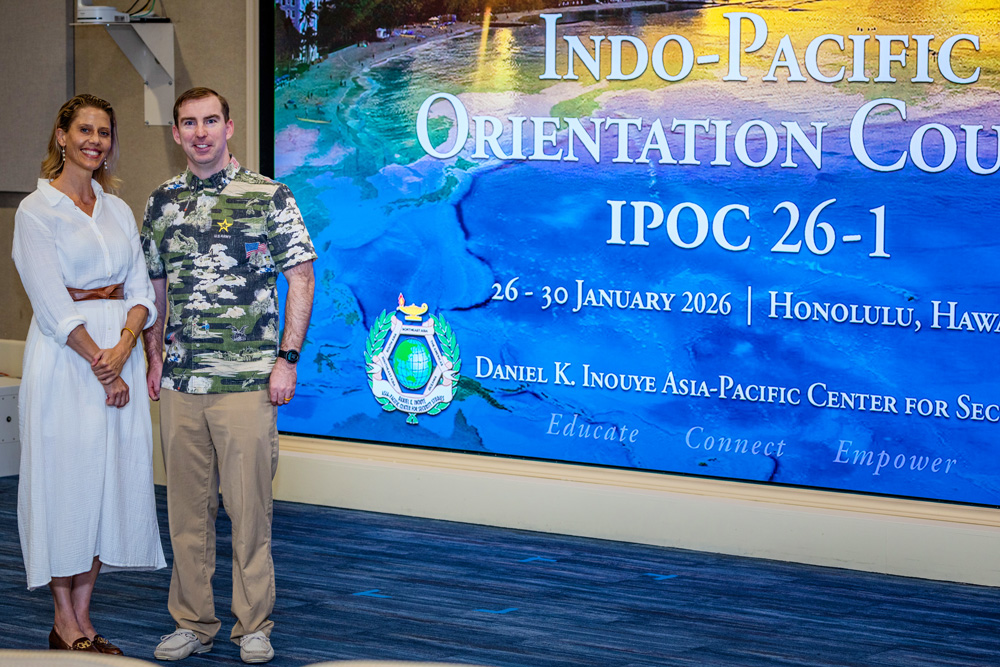
DKI APCSS hosted IPOC 26-1, its first Indo-Pacific Orientation Course of the year, featuring 144 Fellows from eight countries. This program included the Center’s inaugural Emergency Management cohort, fostering collaboration between military, civilian, and government stakeholders to strengthen homeland defense and critical incident response.
By APCSS Editor|2026-02-18T16:55:44-10:00February 18, 2026|Categories: Canyon, Security Nexus, news|Tags: Indo-Pacific, Deterrence, decision-making, Cognitive Security, Strategic Terrain, Perception Manipulation, Trust Erosion, Information Operations, Alliance Cohesion, Synthetic Media|
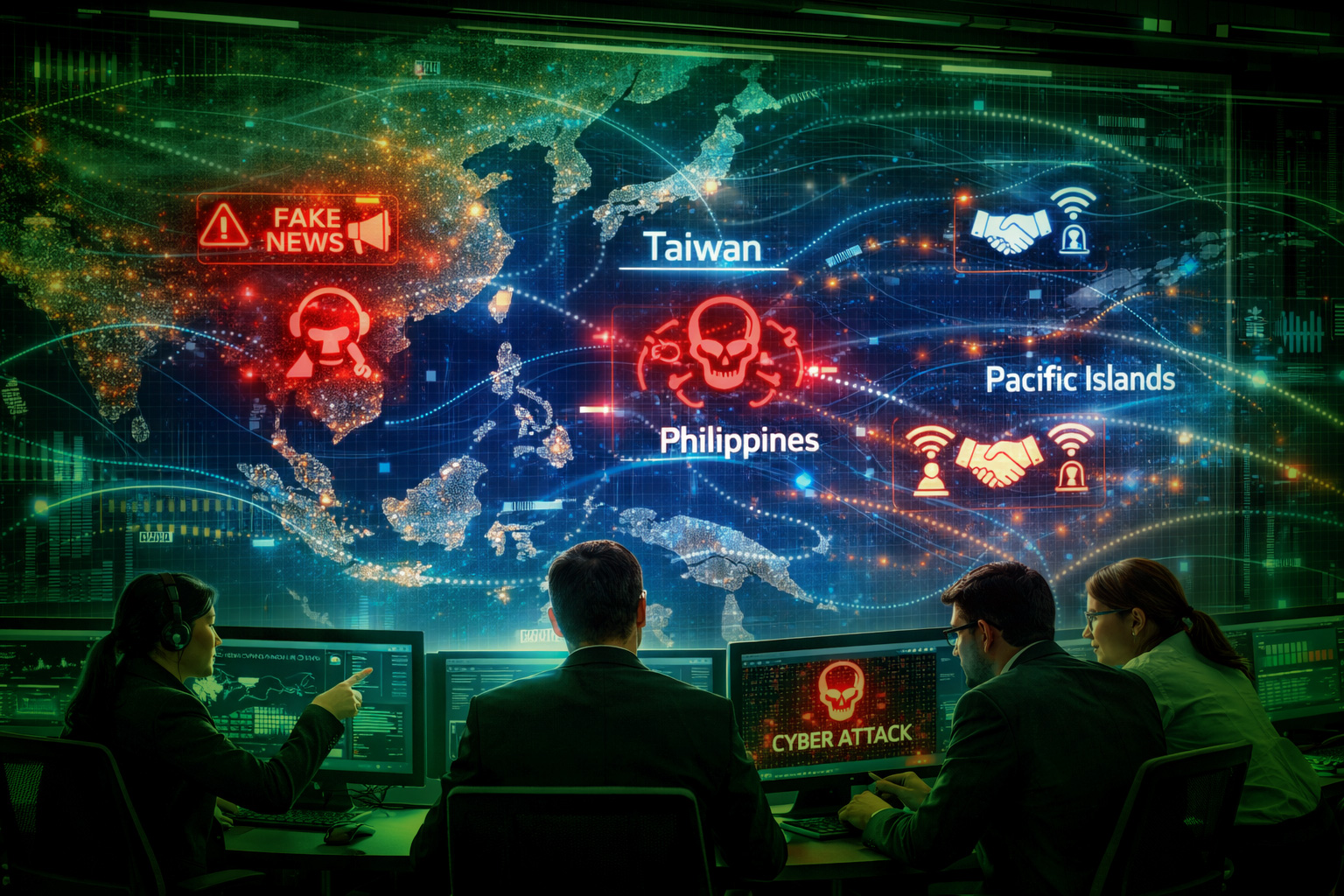
A new Security Nexus Perspective, “Framework for Understanding Cognitive Security as Strategic Terrain,”by Dr. Deon K. Canyon, associate dean of academics and professor at the Daniel K. Inouye Asia-Pacific Center for Security Studies, provides an in-depth look at how adversaries weaponize perception, trust, and decision-making to shape strategic outcomes in modern conflict. The article highlights the growing importance of cognitive security in the Indo-Pacific region, where artificial intelligence, synthetic media, and information operations are increasingly used to influence alliances and complicate crisis response. Explore this timely and thought-provoking analysis to gain a deeper understanding of the challenges and opportunities in navigating contested cognitive terrain.
By APCSS Editor|2025-12-17T08:56:21-10:00December 17, 2025|Categories: Workshops/Events, news|Tags: Indo-Pacific, Strategic Competition, DKI APCSS, 30th anniversary, alumni workshop, commemorative dinner, security collaboration, maritime domain awareness, crisis response, multilateral partnerships|
Gathering regional leaders, alumni, foundation members and distinguished guests, DKI APCSS celebrated its 30th Anniversary Alumni Workshop on Sept. 17, 2025, with a commemorative dinner honoring three decades of collaboration across the Indo-Pacific.
By APCSS Editor|2025-12-12T16:01:58-10:00December 15, 2025|Categories: Security Nexus, news, Moyer|Tags: Indo-Pacific, Security Cooperation, critical thinking, Large language models, artificial intelligence, human-AI partnership, technology adoption, sovereignty concerns, U.S.-China competition, decision-making|
A new Security Nexus Perspective by Dr. Elizabeth Vaughan Moyer examines the strategic application of large language models in Indo-Pacific security operations while addressing technology competition and sovereignty concerns. Moyer, a DKI APCSS fellow and major in the U.S. Air Force, tackles the urgent challenge facing security professionals: leveraging artificial intelligence for enhanced decision-making without compromising critical thinking or accountability. The analysis emphasizes a key argument: organizations that embrace experimentation with imperfect technology will gain significant advantages over those waiting for ideal solutions.
By APCSS Editor|2025-12-12T15:11:13-10:00December 12, 2025|Categories: Security Nexus, news, Malji|Tags: Infrastructure, Indo-Pacific, Geopolitical competition, sovereignty, Small States, strategic alignment, Belt and Road Initiative, diplomatic recognition, regional influence, global power|
A new Security Nexus Perspective by Dr. Andrea Malji, a professor at the Daniel K. Inouye Asia-Pacific Center for Security Studies, examines the strategic role of small states in the Indo-Pacific and their growing influence in global geopolitics. Malji highlights how nations such as Kiribati, the Solomon Islands, Maldives, and Dominica, despite their small populations, occupy critical positions in the contest for global influence. Their decisions on diplomatic recognition, infrastructure partnerships, and alignment with major powers carry significant weight in shaping the regional balance of power. The analysis underscores a key argument: geopolitical competition in the Indo-Pacific is not limited to major capitals but is equally shaped by the choices of small states navigating external pressures and domestic challenges.
By APCSS Editor|2025-12-12T11:47:22-10:00December 12, 2025|Categories: Security Nexus, news, Malji|Tags: Indo-Pacific, regional stability, supply chains, critical minerals, rare earth elements, geopolitical leverage, mineral security, China dominance, refining capacity, maritime chokepoints|
Andrea Malji, a professor at the Daniel K. Inouye Asia-Pacific Center for Security Studies, examines the strategic role of critical minerals in the Indo-Pacific and their use as tools of geopolitical leverage. Malji highlights how rare earth elements and their derivatives are essential for advanced technologies, with the Indo-Pacific serving as the hub for processing and transport. China’s dominance in refining capacity and control over key maritime chokepoints has enabled it to use mineral policy as a form of statecraft, influencing global supply chains and state behavior.
By APCSS Editor|2025-12-17T08:50:09-10:00September 26, 2025|Categories: Workshops/Events, news|Tags: Indo-Pacific, Strategic Competition, DKI APCSS, 30th anniversary, alumni workshop, commemorative dinner, security collaboration, crisis response, multilateral partnerships|
Staying connected to alumni is a key line of effort at the Daniel K. Inouye Asia-Pacific Center for Security Studies. The Center hosted 47 alumni from 22 locations worldwide for a four-day 30th Anniversary Alumni Workshop, held Sept. 16–19, 2025, to strengthen professional networks and explore future security challenges.
By APCSS Editor|2025-12-09T13:03:16-10:00September 8, 2025|Categories: Lumbaca, Security Nexus, news|Tags: proxy warfare, state-sponsored terrorism, regional intelligence sharing, Middle East influence, Iran-Israel conflict, Iranian influence, Southeast Asia terrorism, Iranian proxies, missile shipments, terrorism, Israeli embassy attacks, IRGC, Hezbollah, insurgency, Iran, USINDOPACOM, regional security, Indo-Pacific|
Dr. Lumpy Lumbaca, a counterterrorism expert and faculty member at the Daniel K. Inouye Asia-Pacific Center for Security Studies, explores how Iran has quietly extended its terrorism and insurgency campaigns into the Indo-Pacific in a new Security Nexus article, Iran’s Terrorism and Insurgency in the Indo-Pacific: Implications for the U.S. and Its Partners. Despite its limited recognition as a regional threat, Iran has used proxy networks and covert operations to target Israeli interests across the region for decades. From attempted embassy bombings and airline plots to the use of forged passports and illicit arms shipments, the article details how these actions support Iran’s broader strategy of asymmetric warfare aimed at destabilizing its adversaries.
1600 Amphitheatre Parkway New York WC1 1BA
Phone: 1.800.458.556 / 1.800.532.2112
Fax: 458 761-9562
Email: info@your-domain.com
Web: ThemeFusion